Wordle Strategy Guide – How to Solve in 3-4 Tries
This page provides an annotated Wordle strategy to solve Wordle in three to four guesses. This guide covers how to use each tile effectively, decode color signals, avoid word traps, and what changes users face on hard mode. This full guide explains everything in depth to show the logic behind every strategy.
You can also find today’s Wordle hints and answer on our homepage.
The Goal is Cadence of Play, not Luck
Plenty of players figure out the answers in six attempts, but cracking the puzzle consistently in 3-4 tries is possible only when you follow the trails that clues leave behind.
According to the shared results dataset, an average solve takes four attempts. By contrast, players with a standard approach can hang around 3.4-3.6. Use each tile from all rows very carefully to buy information.
Strong rows teach you how to trim the list of plausible answers and which letters you must try. However, poor attempts fail to purchase any information. Everything below in this guide is built to push you closer to the practical approach to solve the game as quickly as possible.
Row 1 – Buy the Widest Map with a Strong Starting Word
Consider the opener as a reconnaissance move. Avoid solving in one attempt. The first guess exposes more information far more often.
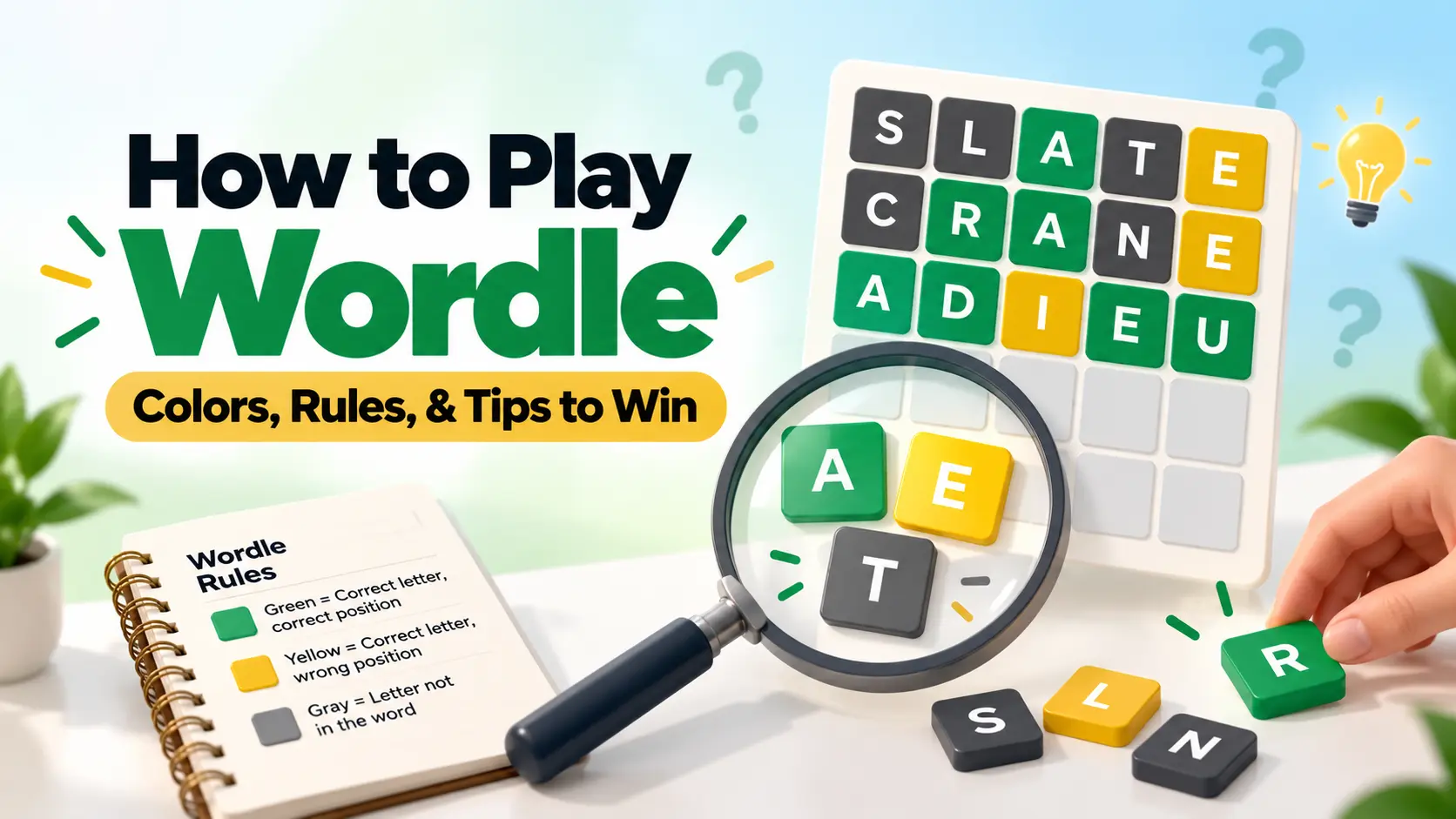
Consistent openers like SLATE, CRANE, TRACE, and RAISE are the words on the table that set your navigation without requiring quirky dictionary words. Full letter arrangements and configurations are discussed in the Best Starting Words Guide.
Players who target two consonants and three vowels can win frequently.
Row 2 – Use Color Feedback Deliberately
The second guess should build on the first row. If the first row has green, keep them planted. Remember, yellow letters need to be shifted to other seats. Try them where they are not banned. Keep the keyboard; steer clear of the greys.
Utilize the information you have gathered from the first row while testing as many letters as possible in the second row.
Still unfamiliar with how to use colors? Refresh your information with the How to Play Wordle Guide. The deeper information, rules, and color feedback are in that guide.
Row 3 Sniping – Trim the List
If you choose to apply a better approach, it gives you useful guesses even in the first two guesses. As you reach the third guess, you can easily eliminate the answers. This strategy shifts the trend from a broad spectrum to a narrower field.
Analyzing word patterns can give you an edge. Consider: if letter A sits in the second slot and E in the fifth, you can brainstorm word families. After recognizing the pattern, it becomes easier to visit the same word family, like BADGE, LARGE, and DANCE. At this stage, players can compare each letter against possibilities and rule out answers that don’t fit your prior information.
If you have several options and can’t pinpoint the answer, choose the diagnostic guess because it deliberately distinguishes the disputed options. Imagine you are left with BARGE, BADGE, and LANCE. Taking a shot at a completely new word like BLIND can help test a new word and eliminate letters faster.
Once you reach your third guess, a diagnostic guess can help you. But on guess five or six, you have no choice but to enter the remaining letters as survivors.
Letter Patterns that save a full Guess
Familiarity with word structure instantly narrows down the words still in play.
Handle Duplicates Carefully
Guess what? Approximately 15% of Wordle answers contain repeated letters like SPEED and VIVID.
Players cannot identify doubles using a single instance. If a player has tested a letter, tiles show green or yellow only. It does not confirm that the word contains twins.
For example, you have two copies guessed in one row, but the answer has one letter. The tiles show one green or yellow and the second as grey, giving you enough information.
Tip: Avoid interaction with doubles in the first two rows and chase unique letters to test diversity. After that, you can test doubles like LL, EE, OO, TT.
Consider Positions, Not Letters
Common Mistakes That Cost Streaks
FAQs
01What is the average solve length of Wordle?
Mostly, it takes around 3.9 guesses, but playing strategically takes 3.4-3.5 on average.
02What should be the technique: solve early or collect data first?
Eliminating letters in the first and second rows is necessary. In the third try, it becomes easier to target a specific word that solves the puzzle.
03Is it necessary to play on Hard mode?
Hard mode builds discipline and trains your mind to think better about positioning. It also teaches you better ways to use the color feedback.
04Which approach should I follow when stuck between two choices?
Use the splitter technique. It shows you what one word carries and what the other lacks.
05Are there any repeats in Wordle?
There are no repeated answers since the NYT acquired the game. The past answers are considered expired.